A.D. Brock Adams
Prologue: Why Pelagius Belongs to Us
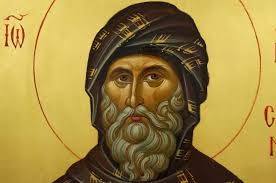
Pelagius was an ascetic monk, theologian, and reformer from the British Isles who taught that human beings were free and had to take responsibility for their own salvation. He represented Celtic Christianity, which was more closely connected to the Eastern rather than the Western Church.
This is the key to understanding both the man and the controversy that bears his name. Pelagius was condemned not by the universal Church but by the Roman West — by a specific theological and political coalition centred on Augustine of Hippo and the North African episcopate, operating within the particular anxieties of a Roman imperial Church watching its world come apart at the seams. No Eastern Fathers were acquainted with Pelagius in any depth, and the condemnations of Pelagianism were included in the Oecumenical Synod of Ephesus only under Western pressure. At the Synod of Diospolis in Palestine in 415, the Eastern bishops found his views orthodox, declaring that Pelagius’s statements align with scripture and reason.
The tradition of ArdNemeton is not Nicene in the Roman sense. Its theological heritage flows from the pre-schism Gaelic Church — more closely aligned with the Eastern understanding of grace, freedom, and the human person than with the Augustinian trajectory that came to dominate the medieval West. Within this tradition, Pelagius is not a heretic to be cautiously rehabilitated. He is a hero of doctrine: a Celtic teacher whose understanding of the human person, of moral agency, and of the cooperative relationship between human freedom and divine grace stands within the apostolic tradition as the East has always understood it.
We claim him as our own. We honour him as a saint.
The Barddas and the Moral Architecture of the Soul
Before examining Pelagius’s theology directly, it is worth establishing the framework within which the tradition of ArdNemeton already understands the soul’s moral life — because that framework, preserved in the Barddas of Iolo Morganwg, articulates a vision of the human person that Pelagius would have recognised immediately as kindred.
A word of scholarly honesty is necessary here, because this essay will be read by professionals. The Barddas was compiled and largely written by Iolo Morganwg — Edward Williams, 1747–1826 — and presented as an authentic compilation of ancient Welsh bardic and Druidic theology. Scholars now generally agree that it is largely Iolo’s own work, drawing on earlier bardic material but not preserving verbatim ancient doctrine. Iolo himself refers to specific named manuscripts with specific named owners, and the internal inconsistency and complexity of the triads he presents suggest he did not simply fabricate them wholesale — but the scholarly consensus is that the Barddas reflects the Druidic revival tradition of the late eighteenth and early nineteenth centuries rather than unbroken ancient transmission.
The tradition of ArdNemeton engages with the Barddas as a foundational text of the living revival tradition — not as a primary historical source for ancient Druidic belief, but as a coherent and theologically serious articulation of the bardic cosmological imagination, drawing on genuine Welsh bardic material and giving it systematic form. This distinction matters, and we make it openly.
With that established: what the Barddas articulates about the soul’s moral life is striking in its consonance with Pelagian anthropology.
The Barddas presents three states of living beings: Annwn (Neamhní), whence the beginning; Abred (Adharta), in which is the increase of knowledge and hence goodness; and Gwynfyd (Saoirse), in which is the plenitude of all goodness, knowledge, truth, love, and endless life. The soul’s movement through these states is governed not by divine predetermination but by the quality of the soul’s own choices and the direction of its own will. According to the three principal qualities of man shall be his migration in Abred: from indolence and mental blindness he shall fall to Annwn; from dissolute wantonness he shall traverse the circle of Abred according to his necessity; and from his love for goodness he shall ascend to the circle of Gwynfyd.
This is not a cosmology of predestination. It is a cosmology of moral formation: the soul’s trajectory through existence is determined by what it chooses to love and what it cultivates through the discipline of its will. The Barddas further specifies: “The three equiportions of man: Abred and Gwynfyd; necessity and liberty; evil and good — all equiponderate, man having the power of attaching himself to the one he pleases.”
Man has the power of attaching himself to the one he pleases. This is Pelagianism in bardic form — the affirmation of genuine moral liberty as the structural condition of the soul’s existence, the recognition that the journey toward goodness is the soul’s own work, undertaken within and sustained by the divine order that makes that journey possible.
“From three things will the necessity of Abred fall on man: from not endeavouring to obtain knowledge; from non-attachment to good; and from attachment to evil.” The soul falls not through inherited corruption but through its own failures of attention, effort, and love. The soul rises not through irresistible grace overriding its will but through its own progressive cultivation of knowledge, goodness, and love — sustained at every step by the divine order within which that cultivation takes place.
The Barddas and Pelagius are, in this regard, reading the same book in different languages.
The Core of Pelagian Vision: Freedom, Formation, and Cooperation with Grace
Pelagius’s theological centre is simple and glorious: God commands only what God creates us able to do.
Human beings are endowed by their Maker with genuine freedom and a moral capacity that must be disciplined, educated, and perfected. As Pelagius wrote in his Letter to Demetrias: “Nothing impossible has been commanded by the God of justice and majesty.” This is not triumphalism but respect — for God’s justice, and for the human person God made in the divine image and called to reflect that image in the world.
From this foundation, and in direct consonance with the Barddas cosmology, flows a theology of the human person that resonates at every point with the Celtic understanding of honour, formation, and sacred obligation:
Moral agency is real. Every person is born capable of genuine choice — neither innately corrupt nor effortlessly righteous, but genuinely free, genuinely responsible, genuinely capable of becoming what God intends them to be. The Barddas affirms the same: necessity and liberty equiponderate in the human soul, and the soul attaches itself to good or evil by its own act.
Sin is imitative and habitual, not ontologically inherited. Wrong-doing spreads by education, custom, and the example of those around us. Pelagius taught that we sinned in Adam not because sin is innate but because it comes from imitation. The Barddas teaches that the soul falls in Abred through its own non-attachment to good and attachment to evil — not through a corruption received at birth but through a moral failure enacted in life. Both place the remedy precisely where it belongs: in education, in example, in the long work of forming a self worthy of its calling.
Grace enables; it does not replace. Divine grace perfects and illuminates the will — it does not obliterate human moral responsibility. Grace is the light in which the free person sees clearly enough to choose well. In the Barddas framework, the divine order within which Abred operates is the enabling condition of the soul’s journey — the structured cosmos within which genuine moral choice is possible — but the soul’s movement through that cosmos is its own. The divine does not do the work for the soul. It provides the conditions within which the soul’s own work is meaningful and its choices real.
The body and the world are good. The flesh is not intrinsically disordered; it becomes disordered through misuse. The Barddas understands Abred — the world of embodied experience — as the necessary school of the soul, not its punishment. Experience in the world is how knowledge and goodness are gained. The world is not a trap. It is a curriculum.
Scriptural and Pastoral Grounds for Pelagian Confidence
Pelagius’s exegesis is rooted in a high view of Scripture’s moral demands. If commandments are divine, they presuppose human ability; to assert otherwise is to condemn God’s law as unjust. His reading of texts such as Romans 5 and the Pauline corpus reframes Adam’s sin as exemplary rather than ontologically infectious. Christ’s teaching — calling disciples to transformation, repentance, and active righteousness — presumes human responsiveness.
Christ commands his disciples to “be perfect, as your heavenly Father is perfect” (Matt. 5:48) — a charge that presumes ability and calls for strenuous spiritual formation. Paul’s calls to “put on the new self” and to labour for righteousness indicate a cooperative sanctification. These are not commands addressed to passive recipients of divine manipulation. They are commands addressed to genuine moral agents capable of response.
Pastorally, the Pelagian vision restores the active vocation of the believer. Where Augustinian pessimism can drive souls into despair or into a false passivity that waits for grace without cooperating with it, Pelagian formation urges concrete practices: rigorous prayer, mutual correction, the discipline of the community, and the sanctification of ordinary life. The result is a robust, accountable, and joyful path of sanctity — one in which the human will is a co-worker with divine grace, not its passenger.
The Celtic Ethos: Where Barddas and Pelagius Meet in Practice
The alignment between Pelagian anthropology and the Barddas cosmology is not merely theoretical. It maps onto the living practices of the Gaelic and bardic tradition at every point.
The bardic formation system — twelve years of rigorous oral training for the fili, culminating in the full authority of the Ollamh — assumes a moral and intellectual agency that must be developed through sustained effort rather than simply received. It might take over twenty years to learn the philosophy, divination, poetry, healing, religious rites, and sacred knowledge required — all without committing anything to writing, the discipline itself shaping the person as much as the content transmitted. This is Pelagian formation in institutional form: the conviction that wisdom requires training, that virtue requires effort, and that the human person is capable of both.
The geasa — the sacred binding vows that shape character and define obligation — assume a person genuinely capable of keeping them and genuinely accountable for breaking them. The Brehon understanding of lóg n-enech — honour-price — assumes that standing reflects real choices and real conduct. The anam cara tradition assumes that the soul has genuine work to do, and that a wise companion can help it do that work more faithfully.
The Barddas triads on virtue are explicit: the three essentials of goodness are love, power, and wisdom — each one perfect of necessity and of indispensable nature. These are not gifts dropped into a passive soul from above. They are qualities developed through the soul’s active engagement with the conditions of Abred — the world of experience, trial, and moral formation.
For those of us cultivating a synthesis of early Irish Christian practice and classical Druidic wisdom, Pelagius’s anthropology is not exotic. It is the recognition, in systematic theological form, of what the Gaelic tradition has always known at depth. The consonance is not coincidental — it reflects the shared moral horizon of a people for whom honour, habit, vow, and virtue are the means by which communities flourish and souls are formed.
The Politics of Condemnation: Historical Context, Theological Miscarriage
History records Pelagius’s condemnation at the Council of Carthage in 418 and by subsequent imperial determinations. These events must be acknowledged soberly and understood clearly.
The universal pre-Augustinian Church was neither fully Pelagian nor fully Augustinian. Augustinianism had little or no impact on the majority of Christianity in the East and did not reflect catholic orthodoxy as it had existed for centuries before the controversy. The so-called semi-Pelagians actually represented the apostolic tradition that had existed long before either Pelagius or Augustine. The same Church that rejected the extremes of Pelagius also rejected the extremes of Augustine.
Augustine’s theological genius brought needed clarity about grace, but his anthropology — shaped by his earlier Manichaean struggles and by pastoral fears about Roman Christian moral laxity — arrived at a position that the Eastern Church never accepted: inherited guilt as an ontological condition, and grace as irresistible divine action overriding the human will. Pelagius believed these teachings contradicted the traditional Christian understanding of grace and free will, turning the human person into a mere marionette, a robot. The Eastern bishops at Diospolis agreed with him.
The Councils of Carthage made juridical decisions in a fraught historical moment, under the shadow of imperial pressure. They did not settle the question for all ages. They did not speak for the Church universal. And they do not bind the tradition of ArdNemeton, which holds its theological heritage from a stream that predates the Augustinian settlement and never fully accepted it.
Pelagius has been described as one of the most maligned figures in the history of Christianity. His canonization within our tradition is an act of theological correction and pastoral restoration — the tradition deliberately recommitting itself to a vision of the human person that the Celtic, Eastern, and bardic streams have always preserved.
The Moral and Ecclesial Benefits of a Pelagian Canonization
Several reasons stand clear for honouring Pelagius as saint and patron of the Order:
Restoring human dignity. Canonizing Pelagius names and honours a theology that preserves human freedom and dignity as divinely intended — affirming what the Barddas affirms in its own register: that the soul is a genuine moral agent, capable of ascent through its love of goodness.
Rehabilitating ethical agency. A Pelagian saint models the Christian life as active cooperation with grace — ascetic effort, community formation, and disciplined virtue — consonant with the bardic formation system at every level.
Pastoral clarity. For souls crushed by inherited-guilt pieties, Pelagius offers a sanative doctrine that restores hope, responsibility, and the genuine possibility of moral progress. The Barddas teaches that the soul that loves goodness ascends. Pelagius teaches the same.
Celtic and bardic consonance. Pelagius’s anthropology coalesces with both the Celtic spiritual practices that emphasise discipline, promise-keeping, and honour, and the Barddas cosmology of moral formation through freely chosen love of the good. He is a natural patron for this Order.
Ecological and social praxis. By locating sin in habit and education rather than ontological corruption, Pelagianism demands social as well as personal reform — education, stewardship, and communal practices that cultivate virtue and justice. The Barddas teaching that the soul falls through non-endeavouring to obtain knowledge makes the pursuit of wisdom a sacred obligation extending into every dimension of community life.
A Pelagian Rule: Ethical Formation for the Order
A Pelagian Rule for the Céli Dé, drawing on both Pelagius’s theological vision and the Barddas understanding of the soul’s formation through moral effort, would centre on:
Daily disciplines of prayer, labour, and study — the long unglamorous work of forming virtuous habit across the arc of a life, echoing the bardic formation system’s insistence that wisdom is accumulated through sustained effort.
The anam cara system as the primary means of communal correction and mutual formation — the soul friend who knows you well enough to tell you the truth, whose companionship mirrors the Barddas understanding that the soul’s journey through Abred is not undertaken alone.
Rituals of example — the community’s cultivation and remembrance of exemplary lives, understanding that virtue spreads by imitation and that the tradition’s saints and heroes are its most powerful moral teachers. Pelagius taught that sin spreads by imitation. Virtue spreads the same way.
Education and stewardship — formation in moral reasoning, care of the sacred landscape, and the practical disciplines of justice and hospitality. The Barddas teaches that from non-endeavouring to obtain knowledge the soul falls — making the pursuit of knowledge a sacred obligation, not merely a personal interest.
The sacramental life as cooperation — the Eucharist, the seasonal rites, the penitential practice of the community understood as active participation in the divine life: the freely given yes of the creature meeting the freely given gift of the Creator, exactly as the Barddas cosmology presents the soul’s ascent through Abred — not passive reception but active, loving, disciplined movement toward Saoirse.
A Saint for Freedom and the Soul’s Progress
Pelagius is, for this Order, the figure for whom the Christian life is an active, communal apprenticeship in virtue — consonant at every point with the Barddas understanding of the soul’s journey through the circles of existence toward the fullness of goodness, knowledge, truth, and love.
The Barddas teaches that man has the power of attaching himself to the good he pleases. Pelagius teaches that God commands only what God creates us able to do. These are the same conviction, arrived at from different directions, converging on the same irreducible affirmation: that the human person is made in the image of a God who takes their freedom seriously, and that the sacred life is the long, disciplined, communally supported work of becoming worthy of that image.
Let us make Pelagius’s memory a living presence among us: a teacher whose call to ascetic discipline, moral courage, and cooperative grace will shape our liturgy, our rule, and our witness — grounded in the same bardic understanding of the soul’s formation that the Barddas preserves, and confirmed by the same Eastern tradition that declared him orthodox when the Roman West condemned him.
Honour Pelagius. Teach Pelagius. Live Pelagius.
References
- Pelagius. Letter to Demetrias (c. 413 CE).
- Pelagius. Commentary on the Pauline Epistles (c. 406 CE).
- Iolo Morganwg (Edward Williams), Barddas, ed. J. Williams Ab Ithel (1862, 1874).
- Rees, B.R. (1988). Pelagius: A Reluctant Heretic. Boydell Press.
- Newell, J. Philip (1997). Listening for the Heartbeat of God. SPCK.
- O’Loughlin, Thomas (2000). Celtic Theology. Continuum.
- Markus, G. (2005). ‘Pelagianism and the Common Celtic Church’, Innes Review.
- Löffler, Marion (2007). The Literary and Historical Legacy of Iolo Morganwg. University of Wales Press.


Leave a Reply