A.D. Brock Adams
The Living Matrix
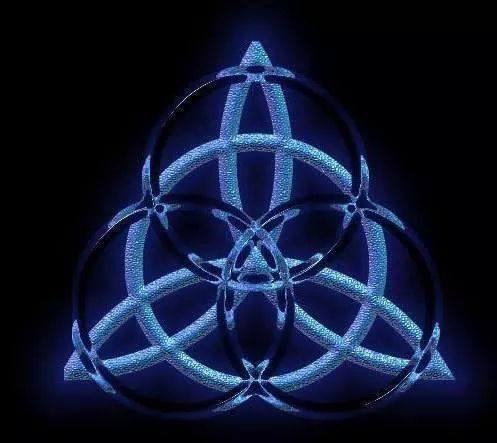
Where the Western classical tradition works with four elements — Earth, Water, Air, and Fire — the Celtic cosmological imagination perceives nine. This is not a more complicated system so much as a more intimate one: a sacred matrix that maps the natural world not in abstract categories but in living relationships between the outer landscape and the inner body, between the physical world and the spiritual reality it expresses.
Each of the nine elements has its outer form — the element as encountered in the world — and its inner correspondence — the element as it lives within the human body and soul. Together they constitute a complete cosmological language: a way of understanding the human person as a microcosm of the sacred world, and the sacred world as a macrocosm of the human person. To know the nine elements is to know both.
In a Christo-Druidic context, these nine elements are understood as the nine modes through which Dé/Dia — God the Eternal — manifests within creation, each one a particular quality of the divine presence made available to the practitioner through the specific form it takes in the natural world and in the body they inhabit. The practice of working with the nine elements is therefore not a magical technique separate from the tradition’s theological commitments. It is the theological commitments lived in the body, in the landscape, and in the daily act of paying attention.
The Nine Elements
1. Talamh (Earth) / Colaind (Flesh)
Talamh is the element of foundation — the earth beneath the feet, the soil that holds the roots of the clan tree, the land from which food comes and to which the dead return. It is the most immediate of the nine elements: the one that cannot be avoided, that supports every other act of living.
In the Christo-Druidic understanding, Talamh is the body of the cosmic Christ made visible in the material world — God’s manifest creation, the sacred ground of the Incarnation. The earth is not a fallen realm to be escaped but a consecrated one to be inhabited with reverence. Colaind — Flesh — is its inner correspondence: the body through which the spirit inhabits the material world, the vehicle of all experience, the instrument of all offering. The sanctity of the body is inseparable from the sanctity of the earth. Both are sacred because both are the divine’s chosen medium of self-expression. To honour the land is to honour the body. To honour the body is to honour the land.
2. Cloch (Stone) / Cnaimh (Bone)
Cloch is the element of memory and endurance — the standing stone that outlasts every generation, the cromlech that holds the ancestors, the bedrock beneath the soil. Stone is the earth’s long thought: slow, deep, and permanent beyond any single human lifetime. It is the keeper of ancestral continuity, the medium through which the past makes itself present to the living.
In Christian symbolism, the stone carries the weight of Christ’s words: upon this rock I will build my Church. In the Druidic tradition, the sacred stone circle — the cromlech — is the rock upon which the tradition builds its understanding of the divine. Both are affirmations of the same truth: that faith requires foundation, and that foundation must be older and harder than any individual life.
Cnaimh — Bone — is its inner correspondence: the skeleton that endures within the body as the standing stone endures within the landscape, the link between the individual life and the ancestral lineage that produced it. The bones of the dead in the roots of the clan tree; the stones of the ancestors in the ring of the nemeton — Cloch and Cnaimh together bridge the mortal and the eternal, the particular life and the long continuity of the lineage that gave it shape.
3. Craobh (The Forest) / Bhidh (Hair)
Craobh is the element of growth, transformation, and the interconnectedness of all living things. The forest is the sacred landscape in its most concentrated form — the place where the divine is most immediately encountered, where the canopy becomes the roof of the world’s greatest temple and the roots reach down into the ancestral realm below.
The Ogham — the sacred alphabet of the tradition — is the forest made legible: each letter named for a tree, each tree carrying its own sacred associations and qualities, the whole system constituting a map of the living world read through the medium of the wood. To know the Ogham is to know the forest from within. To inscribe it on the hand is to carry the forest’s wisdom in the body.
Bhidh — Hair — is its inner correspondence: the part of the body that grows most visibly, that flows like branches in the wind, that was understood in many traditions as the carrier of the individual’s vital energy and spiritual force. In a Christo-Druidic context, hair carries something of the quality of the Holy Spirit — the tangible, living expression of the divine power flowing through the human person. Craobh, Bhidh, and the Ogham together represent the spirit of life, transformation, and divine potential — linking body, thought, and action in communion with the sacred.
4. Muir (Sea) / Fuil (Blood)
Muir is the element of mystery, depth, and the divine that exceeds all human knowing. The sea is the oldest boundary of the Celtic world — the horizon beyond which the Otherworld begins, the medium through which the great voyages of the Immrama tradition are undertaken, the realm of the divine that cannot be fully named or contained. It is simultaneously the source of life and the edge of the known.
Fuil — Blood — is its inner correspondence: the river of ancestry and identity flowing through the body, the medium of kinship and lineage, the life force that the tradition understands as carrying the memory of the dead forward into the living. In Christianity, the Blood of Christ is the medium of redemption — the life given so that life might continue. In the Celtic understanding, blood is the river of ancestry and covenant, the living connection between the individual and the lineage that shaped them.
Muir and Fuil together suggest the deep, transformative power of both spiritual and physical bloodlines — where the mysteries of the ocean are tied to the lifeblood of creation, and where the depths that cannot be fully known are also the depths that sustain every surface of life.
5. Grian (Sun) / Drech (Face/Eye)
Grian is the element of illumination — the sun that makes sight possible, that drives the seasonal cycle, that marks the great turning points of the sacred year at solstice and equinox. The sun is both the physical source of all earthly life and the most immediate symbol of the divine clarity that illuminates understanding.
In the Christo-Druidic framework, Grian carries the quality of Christ as the Lux Mundi — the Light of the World — the divine illumination that enters the darkness and is not overcome by it. The sun that rises at Midwinter and strengthens toward Midsummer enacts the same theological drama as the Resurrection: light returning from its apparent defeat, life reasserting itself against the encroachment of darkness.
Drech — Face/Eye — is its inner correspondence: the human capacity to perceive, to see, to be in direct relationship with what is real. The face is the most personal and unrepeatable surface of the individual; the eye is the instrument through which the divine light enters the person. Together Grian and Drech emphasise the clarity and enlightenment that come from direct spiritual experience — from turning toward the light with open eyes and allowing it to illuminate what it finds there.
6. Luath (Moon) / Snamh (Mind)
Luath is the element of cycles, intuition, and the feminine principle of mystery and creation. The moon governs the tides and the menstrual cycle, marks the months, illuminates the night with reflected rather than direct light. It is the keeper of secrets, the measure of hidden time, the principle of knowing that operates through feeling and intuition rather than through the direct clarity of solar illumination.
Snamh — Mind — is its inner correspondence: the intellect as it moves through the cycles of contemplation, the mind that swims through ideas as the moon moves through its phases, gathering and releasing, waxing and waning in its understanding. Luath and Snamh together represent the balance of intuition and intellect, the lunar and the solar modes of knowing, the mystical and the rational held in productive tension as twin pathways toward spiritual understanding.
7. Nel (Clouds) / Imradud (Brain)
Nel is the element of transition and divine communication — the clouds that move between earth and heaven, that carry the rain from the sea to the mountain, that veil and reveal the sky in a perpetual drama of concealment and disclosure. The cloud in the Biblical tradition is the medium of theophany: the pillar of cloud that led Israel in the wilderness, the cloud at the Transfiguration from which the divine voice spoke, the cloud of unknowing through which the mystic approaches the divine.
Imradud — Brain — is its inner correspondence: the organ of reception, the instrument through which divine inspiration is received and processed, the space where Imbas descends and the human mind opens to what exceeds it. Nel and Imradud together reflect the intersection of divine revelation and human cognition — the moment when what comes from above meets the receptive instrument below and something new becomes possible in the world.
8. Dé/Dia (God) / Anam (Soul/Name)
Dé — Dia — is the divine essence itself: the Creator, the transcendent One, the ground of all being from whom all nine elements proceed and to whom all nine return. In the Christo-Druidic understanding, Dé encompasses the fullness of what many traditions have known under many names: the Father, Son, and Holy Spirit of the Christian Trinity; Shiva, Vishnu, and Brahma of the Hindu Trimurti; Odin, Freya, and Thor of the Norse; Brigid in her triple aspect as poetess, smith, and healer; and all the great divine archetypes honoured across the long memory of human sacred experience. All names for the same inexhaustible reality, all faces of the one who exceeds every face.
Anam — Soul/Name — is its inner correspondence: the innermost aspect of the self, the spark of divinity that connects the individual to the eternal, the carrier of the soul’s longing for reunion with the source from which it came. The name is not merely a label — it is the soul’s specific signature in the world, its particular way of being that no other being shares, the irreplaceable form through which the divine expresses itself in a single, unrepeatable life.
Together, Dé and Anam embody the entire relationship between God and humanity — the infinite source from which all flows, and the individual soul’s eternal journey toward reunion with that source. They are the first and last of the nine elements, the alpha and omega of the system, the beginning and end of the sacred matrix within which all other elements take their meaning.
9. Gaeth (Wind) / Anal (Breath)
Gaeth is the element of the divine breath — the wind that cannot be seen but whose effects are everywhere visible, that moves through the grove and sets the sacred canopy trembling, that carries the prayer of the fire upward from the altar into the open sky. The wind is the most immediate symbol of the Holy Spirit in both the Celtic and Christian traditions: the ruach of the Hebrew scriptures that moved over the face of the waters at creation, the wind that filled the upper room at Pentecost, the breath that Amergin invoked when he stood on the shores of Ireland and felt the divine presence moving through all things.
Anal — Breath — is its inner correspondence: the most immediate and irreplaceable of all bodily acts, the one that cannot be interrupted for more than a few minutes without death, the rhythm that accompanies every moment of conscious life and ceases with it. To breathe is to participate in the element of Gaeth — to draw the divine breath into the body and release it again in a continuous act of exchange with the living world.
Together, Gaeth and Anal represent the movement of the Spirit in both the physical and spiritual realms — guiding, inspiring, empowering, and sustaining the practitioner in the practice of all nine elements. They are the living reminder that the divine is not distant but intimate: as close as the next breath, as immediate as the wind on the face, as constant as the rhythm of the lungs that sustain the body’s life.
The Nine as One
Taken together, the nine elements and their bodily correspondences constitute a complete map of the sacred relationship between the human person and the divine world they inhabit. Earth and Flesh, Stone and Bone, Forest and Hair, Sea and Blood, Sun and Eye, Moon and Mind, Cloud and Brain, God and Soul, Wind and Breath — each pair a window into one of the nine modes through which Dé/Dia expresses the divine life within creation, each one a particular quality of the sacred available to the practitioner who learns to attend to it.
To know the nine elements is to know the world as sacred in its fullness — not in the abstract, but specifically, bodily, and in the particular landscape one actually inhabits. The tradition does not ask for a generic reverence for nature. It asks for the specific knowledge of specific things: this oak, this wind, this stone, this breath, this blood, this face turned toward this sun.
That specificity is where the sacred lives.
References
- Iolo Morganwg (Edward Williams), Barddas, ed. J. Williams Ab Ithel (1862, 1874).
- Carmichael, Alexander (1900). Carmina Gadelica. T. & T. Clark.
- Mac Cana, Proinsias (1970). Celtic Mythology. Hamlyn.
- McManus, Damian (1991). A Guide to Ogam. Maynooth Monographs.


Leave a Reply