A.D. Brock Adams
The Wheel That Turns
The rhythm of a Druid’s life is a song sung to the hours of the day, the phases of the moon, and the great turning festivals of the year. Time, in this tradition, is not a neutral container within which events happen — it is itself sacred, structured, and alive. To inhabit it with full awareness is to participate in the divine order of the cosmos rather than merely to be subject to it.
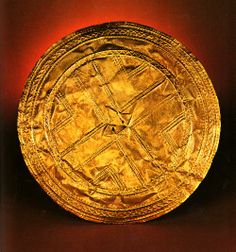
Rota Taranis — the Wheel of Taranis, the sacred wheel of the year — turns through four great axes: the High Holidays of fire and threshold, the Cross-Quarter Days of seasonal heartbeat, the Solar Quarter Days of solstice and equinox, and the Lunar Observances that structure the inner calendar of the soul. Beneath all of these, the day itself is divided into sacred stations, each marked by prayer, flame, and the quality of attention appropriate to that hour.
Together these concentric cycles — daily, monthly, seasonal, annual — constitute the tradition’s complete liturgical framework: the structure within which the community’s spiritual life is organised, the sacred geography of time that roots each moment in something larger than itself.
Categories of Sacred Time
The High Holidays — Na Féilte Móra
The High Holidays are the great hinges of the year: the moments when the veil between worlds thins most completely, the sacred fire burns brightest, and the community’s covenant with the divine, the ancestral, and the natural world is most directly renewed. They are marked by bonfires, vigils, processions, and rites of passage, typically preceded by fasts or vigils and followed by days of feasting and communal celebration.
Be’al Teine — Bealtaine, the Fire of Life — opens the bright half of the year with twin bonfires, the blessing of cattle and household, and the ecstatic affirmation of summer’s return.
Samhain — the Feast of the Ancestors — closes the bright half and opens the dark, gathering the community beneath the clan trees to honour the beloved dead and renew the community’s bond with those who have gone before.
Grianstad Gheamhraidh — the Winter Solstice, Alban Arthan — is the Birth of Light from Darkness: the sun’s lowest point and its first promise of return, the divine child born in the heart of the year’s deepest night.
The Cross-Quarter Days — Lá na Leathránaí
These fall between the solstices and equinoxes, marking the heartbeats of each season — moments of practical preparation and ritual movement that keep the community in step with the land’s own rhythms.
Imbolc (February 1st) — purification and awakening; Brìghde’s flame rekindled; the faithful renewed.
Be’al Teine (May 1st) — seeding and fertility; the pastoral year begun; the community driven between the fires.
Lughnasadh (August 1st) — first fruits and games; the harvest’s beginning; labour honoured and the Tailteann spirit alive.
Yule — the midwinter hearth feast; rebirth and the keeping of the sacred fire through the darkest nights.
The Quarter Days — The Four Albans
These are the solar pivots: the equinoxes and solstices that mark the turning points of the solar year, observed with solar rites, chanting, offerings to sun and sky, and meditations on balance and transformation.
Alban Eilir — Cothrom-là an Earraich, the Spring Equinox: renewal and seed, the balance tipping toward light.
Alban Hefin — Grianstad Samhraidh, the Summer Solstice: light and joy, the sun at its full strength.
Alban Elfed — Cothrom-là an Fhoghair, the Autumn Equinox: balance and reckoning, the final solar gate before the descent into the Samhain season, a still point from which to see clearly, give thanks fully, and step bravely into the dark.
Alban Arthan — Grianstad Gheamhraidh, the Winter Solstice: descent and promise, darkness at its depth, and within that darkness the first stirring of return.
The Alban festivals are among the oldest cross-cultural religious observances — echoed in solstice and equinox rites from Ireland to India, from Stonehenge to the Andes. In Druidic thought they provide a framework of harmony, enabling human beings to align themselves with the natural world in reverence, participation, and awe.
Lunar Observances — Amanna na Gealaí
The moon’s phases structure the inner calendar of the soul, particularly among the bardic and seer traditions. Where the solar calendar governs the community’s public and seasonal life, the lunar calendar governs its interior rhythms — initiation, healing, legal assembly, and the cycles of spiritual formation.
The Gealach Lán — the Full Moon — is the time of the Cathaireachd: the sacred assembly of the initiated, gathered for blessing, healing, divination, and the renewal of communal obligations. The full moon’s complete illumination reflects the community gathered in the fullness of its awareness, nothing hidden, everything visible.
The Gealach Ùr — the New Moon — is the time of Baisteadh: beginnings, cleansing, baptisms, and Ogham casts. The dark moon is Neamhní made visible in the sky — the condition of unmanifest potential from which all new life emerges. Initiations and significant life transitions are conducted at this threshold.
The Sixth Night of the Moon — the first quarter waxing — is the traditional time for the gathering of mistletoe from the sacred oak, performed in solemnity by torchlight. It is an auspicious time for divination and for the making of formal pronouncements binding on the community.
The Twelve Archetypal Lunar Months:
| Month | Gaelic Title | Theme |
|---|---|---|
| January | Mìos nan Gèill | Binding of vows |
| February | Mìos nan Gathan | Emerging light |
| March | Mìos na Beatha | Quickening life |
| April | Mìos nan Fliuch | Waters and planting |
| May | Mìos nam Blàth | Blossoms |
| June | Mìos na Grèine | Solar ascendance |
| July | Mìos an Fhàis | Growth and tending |
| August | Mìos an Tiodhlaic | First harvest |
| September | Mìos na Tuatha | Tribal gratitude |
| October | Mìos nan Sgàil | Shadows and thinning |
| November | Mìos na Sìthichean | Ancestral contact |
| December | Mìos nan Soluis | Light within darkness |
Lunar Phases Within Each Month:
| Phase | Gaelic Name | Function |
|---|---|---|
| New Moon | Gealach Ùr | Intention, renewal, initiation |
| First Quarter | A’ Chiad Chairteal | Strengthening, building |
| Full Moon | Gealach Lán | Illumination, Cathaireachd, celebration |
| Last Quarter | An Dàrna Chairteal | Harvesting, releasing |
| Dark Moon | Gealach Dorcha | Rest, dreaming, inwardness |
Uairean na hAoine Druidich: The Monastic Hours of the Druidic Day
The tradition of the Céli Dé — the Companions of God who once sanctified every hour through disciplined devotion in the monasteries of Tallaght and Iona — lives on in the daily rhythm of the ArdNemeton practice. Each hour of the day is a sacred station, marked by flame, prayer, and the quality of attention appropriate to that moment. The day begins at sunset, in accordance with the tradition’s cosmological conviction that darkness precedes light — the night coming first, the day following, as Samhain precedes the solar year and Neamhní precedes all becoming.
Daily Solar Stations — The Monastic-Druidic Hybrid:
| Canonical Hour | Solar Time | Gaelic Name | Meaning | Function |
|---|---|---|---|---|
| Lauds | Dawn | Uair na Grèine | Hour of the Sun | Praise and welcoming of the light |
| Prime | Mid-morning | Uair an Dèalraidh | Hour of Radiance | Blessings for the work ahead |
| Sext | Solar Noon | Uair na Meadhan-là | Hour of Midday | Gratitude and centering |
| None | Mid-afternoon | Uair an Fhàis | Hour of Growth | Prayerful momentum and action |
| Vespers | Sunset | Uair na Sìthe | Hour of Peace | Release and forgiveness |
| Compline | Nightfall | Uair na Ciùine | Hour of Quiet | Rest and dreamward reflection |
At Dawn — Maidin, Lauds:
At the rising of the sun, the sacred flame is kindled and the heart turns eastward toward the dawning light. Brìghde — patroness of poets and keepers of the fire — is greeted, and prayer is offered for guidance, clarity, and strength for the tasks ahead. Offerings of incense, milk, or song may accompany the invocation. The air at dawn is sacred: each breath a renewal of the covenant between life and spirit.
At Midday — Meadhan Là, Sext:
When the sun stands highest, the world pauses in a moment of perfect stillness. This is the hour of the Still Flame — the inner quietude that hallows the work of human hands. The Druid withdraws briefly from labour to stand in awareness, not in words but in presence — breathing the light, anchoring in gratitude, remembering the eternal flame within. This hour mirrors the Sext of the monks: prayer rising at the zenith to hallow the midpoint of the day.
At Evening — Tràth Feasgair, Vespers:
As the day wanes, the Druid turns westward to give thanks. The hearth flame is smoored — gently covered and blessed, its embers preserved through the night. Prayers are said for peace in the home and rest for the soul. Ancestors and unseen companions are honoured; burdens and regrets are laid down into the enfolding dark.
Smùradh Brìghde — The Smooring of Brigid:
Tha mi smàladh an teine,
I am smooring the fire,
Mar a bhiodh Brìghde a’ còmhdach a’ chearcaill,
As Brigid would smoor the circle,
Beannaichte an tigh, beannaichte an teine,
Blessed be the house, blessed be the fire,
Beannaichte na daoine uile, is na h-anamhan riu,
Blessed be all the people, and the souls with them.
An t-uisge, an talamh, agus an teine gar dìon,
Water, earth, and fire keep us safe,
Na h-ainglean Rìgh, na h-ainglean an dorais,
The angels of the King, the angels at the door,
Gabh iad os cionn na leapa an oidhche seo,
Take watch above the bed this night,
Gus am pill an latha geal air an teine a-ràithe.
Till the bright day returns to the hearth again.
Eadar an t-sean-fhios agus an cridhe uaine,
Between the old wisdom and the green heart,
Tog, a Bhrìghde, do sholas — solas an tighe, solas an anama,
Raise, O Brigid, your light — light of the house, light of the soul,
Beannaich sinn, A Bhrìghde, le do làmh chaoimh,
Bless us, O Brigid, with your gentle hand,
‘S cùm do lasair bheannraichte oirnn fad na h-oidhche.
And keep your blessed flame upon us through the night.
At Night — Iar-Mheadhan-Oidhche, Compline:
The final prayer of the day is said in stillness. The Druid recalls the blessings and lessons of the passing hours, forgives and releases all things into the care of the divine. The inner flame glows quietly beneath the ashes — the symbol of the light that never dies, the fire that will be kindled again at dawn as surely as the sun returns after every night.
Feasting and Fasting — Na Fleánna agus Na Traoina
The Druidic path honours both celebration and self-discipline, understanding them not as opposites but as the two faces of a single devotional rhythm — feast and fast complementing each other as the bright and dark halves of the year complement each other, each making the other possible and meaningful.
The Feasts — Na Fleánna
In the Brehon tradition, feasting was far more than social custom. It was a sacred and political obligation — the most visible and legally enforceable expression of the covenant between the ruler and the people. The measure of a leader’s fitness was not conquest or accumulated wealth but the generosity and abundance of the feasts they hosted. There was no penal system in place — the judgments of the Brehons ordered the payment of compensation and the maintenance of the obligations of hospitality that structured the community’s social life.
The feast took many forms: ritual feasts held after great rites or seasonal observances; ancestor feasts such as those of Samhain, when a place was set for the departed; victory feasts commemorating contests or achievements in the spirit of the Tailteann Games; and votive feasts offered in thanksgiving for answered prayers or blessings received. Each was simultaneously a religious celebration and a social covenant — weaving together the sacred, the communal, and the political in the way the tradition has always understood these to be inseparable. Storytelling, bardic recitation, folk dance, and the offering of the first cup to the divine were integral to every feast, sanctifying abundance and affirming right relationship between ruler, people, and land.
The Fasts — Na Traoina
In the Brehon world, fasting was not merely an act of private devotion. It was a moral force and a legal instrument of remarkable power.
The ancient act of troscud was used by the lower class against the upper class as a necessary legal step when bringing forth a grievance. It gave an individual of lower standing a temporary position of moral and legal power over a more privileged individual. The troscead, or fasting upon one, consisted in going to the offender’s house and waiting at their door a certain time without food. The text of the Brehon law says: “He who refuses to cede what should be accorded to fasting, the judgment on him according to the Féini is that he pay double the thing for which he was fasted upon.”
Scholars speculate that this practice carried such force because of the high importance the culture placed on hospitality — allowing a person to die at one’s doorstep, for a wrong of which one was accused, was considered a great dishonour. The tradition carried on even into the Christian era, with documented cases of early Irish saints fasting against God — invoking the divine as witness of wrong in a tradition too deeply rooted to be displaced by the new faith.
Beyond its legal power, fasting was also understood as a form of devotional refinement — the clearing of the vessel for vision, prayer, and sacred presence. Various forms of fasting reflected differing intentions: the partial fast abstaining from meat, dairy, or other pleasures; the water fast undertaken in solitude or retreat; the vigil fast kept through wakeful night prayer; and the communal fast observed in preparation for festivals or significant astronomical events. These were often accompanied by pilgrimage, ritual bathing, confession, and acts of restitution — restoring harmony between self, community, and the sacred order.
Abstinence before the High Holidays — particularly before Samhain and Imbolc — purified body and mind for the sacred moment ahead. The feast that followed was the other face of the same devotion: sanctified joy, the ritualised celebration of life’s abundance, gratitude made communal and embodied. Together, fasting and feasting formed the tradition’s complete moral and spiritual rhythm: restraint and gratitude, humility and reverence, power and peace held in the balance of a life consciously lived in time.
Living the Hours, the Months, the Year
To walk the Druidic path is to live in rhythm with the divine breath — the pulse of sun and moon, the song of tide and wind, the turning of the wheel through darkness and light, ending and beginning, sacrifice and celebration.
Each hour sanctified draws the soul deeper into harmony with the world. Each lunar phase attended returns the community to the interior rhythms of growth and rest that secular life tends to ignore. Each seasonal festival renews the covenant between the living, the dead, the divine, and the land that holds them all.
The Céli Dé of today carry forward the same devotion that once hallowed the stones of Iona and Tallaght — a rhythm of life both earth-rooted and heaven-bound, both ancient and immediately present, ever luminous in its still flame.
The flame is smoored at evening. It glows through the night beneath the ashes. And at dawn it is kindled again — as it has always been, as it will always be.
References
- Carmichael, Alexander (1900). Carmina Gadelica. T. & T. Clark.
- Kelly, Fergus (1988). A Guide to Early Irish Law. Dublin Institute for Advanced Studies.
- Brehon Academy: ‘Fasting for Justice: Hunger Strike in Ancient Ireland’.
- Library Ireland: ‘Distraint by Fasting — Brehon Laws’.
- MacNeill, Máire (1962). The Festival of Lughnasa. Oxford University Press.
- OBOD: ‘The Eight Festivals’.
 ArdNemeton na Tuatha
Leave a comment