“To learn anything well, one must forget it several times.
The sign expresses the thing,
the thing is the virtue of the sign
There is an analogical correspondence between the sign, and
the thing signified.
The more perfect is the sign, the more entire the correspondence.
To say a word is to evoke a thought and make it present,
to name God is to manifest God.
Words act upon souls, and souls react upon bodies;
Consequently, one can frighten, console, cause to fall ill, even
Kill, and raise from the dead by means of words.
In the name is contained the verbal or spiritual doctrine of the being itself.
When the soul evokes a thought, the sign of that thought
Is written automatically in the light.
To invoke is to adjure. That is to say, to swear by a name. It
Is to perform an act of faith in that name, and to
Communicate in the virtue which it represents.
Words in themselves are, then, Good or Evil, poisonous or wholesome.
The most dangerous words are vain and lightly uttered
Words, because they are voluntary abortions of thought.
A useless word is a crime against the spirit of intelligence. It
Is an intellectual infanticide.
Things are for everyone what he makes of them by naming them.
The word of everyone is an impression or a habitual prayer.
To speak well is to live well.
A fine style in an aureole of Holiness.”
-Robert Nye-
Spellcraft: The Power of Naming
Modern people often imagine spellcraft as a collection of secret words, exotic gestures, or hidden rituals. Yet the oldest understanding of magic is far simpler and far more profound: spellcraft begins with speech.
The English word spell itself once meant not merely an enchantment, but a discourse, a story, or the act of speaking. To cast a spell was, in its original sense, to speak reality into a particular shape. The magician, the druid, the bard, and the priest all understood that words are not empty sounds. Words are acts.
As Robert Nye writes:
“The sign expresses the thing, the thing is the virtue of the sign.”
A name is never merely a label. It is a bridge between the visible and invisible worlds. The sign points toward the thing signified, and the more perfect the sign, the more complete the correspondence. When we speak, we do more than describe reality—we participate in it.
This principle lies at the heart of the ancient Bardic Secret concerning the Name of God. Across many traditions, the Divine Name is treated with reverence because a name is understood to contain the spiritual doctrine of the being itself. To know a true name is to establish relationship. To invoke a name is not simply to mention it, but to call upon the virtue, character, and power that the name represents.
Spellcraft therefore is not primarily about commanding supernatural forces. It is about alignment. When the soul forms a thought and gives it expression, that thought leaves an imprint upon the world. Every word becomes a seed planted in the soil of consciousness.
This is why careless speech has always been regarded as dangerous. As Nye observes, words can comfort or terrify, heal or wound. A blessing can strengthen the spirit. A curse can poison the mind. Long before any visible action occurs, reality is often shaped by the stories people tell themselves and one another.
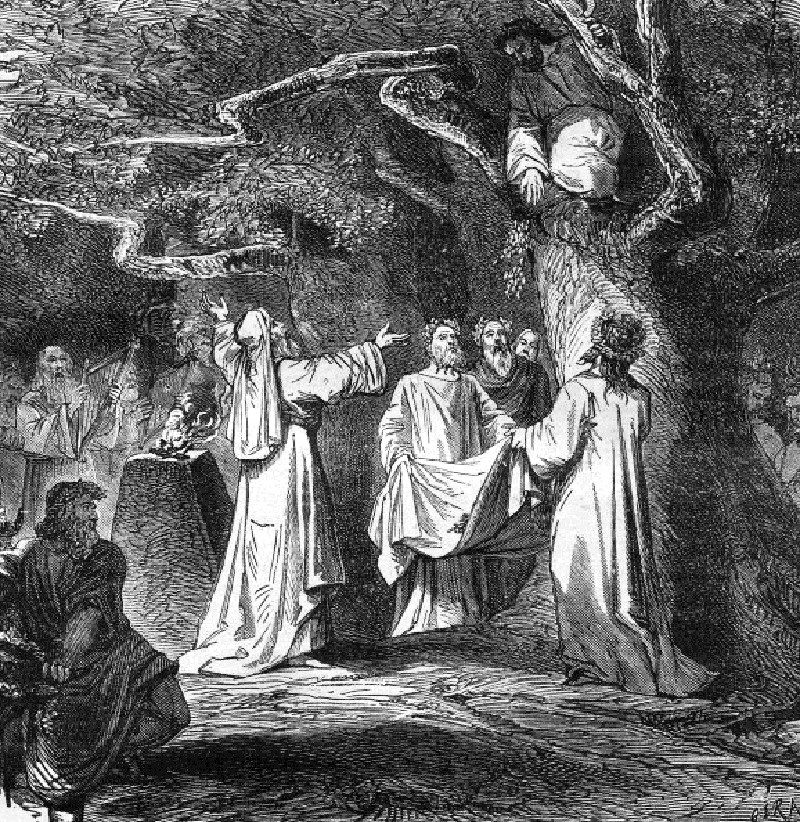
The ancient druids understood this well. The bard was not merely an entertainer but a guardian of language itself. Praise elevated. Satire diminished. Poetry preserved memory. Prayer sanctified existence. Through speech, entire cultures were formed and maintained. The spoken word was regarded as a force capable of creating order from chaos.
Everyday life provides countless examples of this principle. A child repeatedly told they are worthless may come to believe it. A person encouraged with sincerity may discover strengths they never knew they possessed. Nations rise around shared stories. Communities form around common names and identities. Even our private thoughts are often internal conversations, repeated spells cast upon ourselves day after day.
In this sense, everyone practices spellcraft whether they realize it or not.
The question is not whether we cast spells, but what kind of spells we cast.
Do our words sow fear or courage? Division or unity? Despair or hope? Do we name the world according to its wounds, or according to its possibilities?
The druidic path teaches that language carries responsibility. To speak is to create consequences. To invoke is to participate. To name is to reveal.
Thus true spellcraft begins not with exotic rituals but with disciplined speech. It begins by learning the names of things, speaking truthfully, blessing intentionally, praying sincerely, and refusing to squander language on empty words.
For, as the old wisdom teaches, things become for each of us what we make of them by naming them.
To speak well is to think well.
To think well is to live well.
And a life lived in harmony with truth becomes, in itself, the greatest spell ever cast.


Leave a Reply